
Last updated October 16, 2026
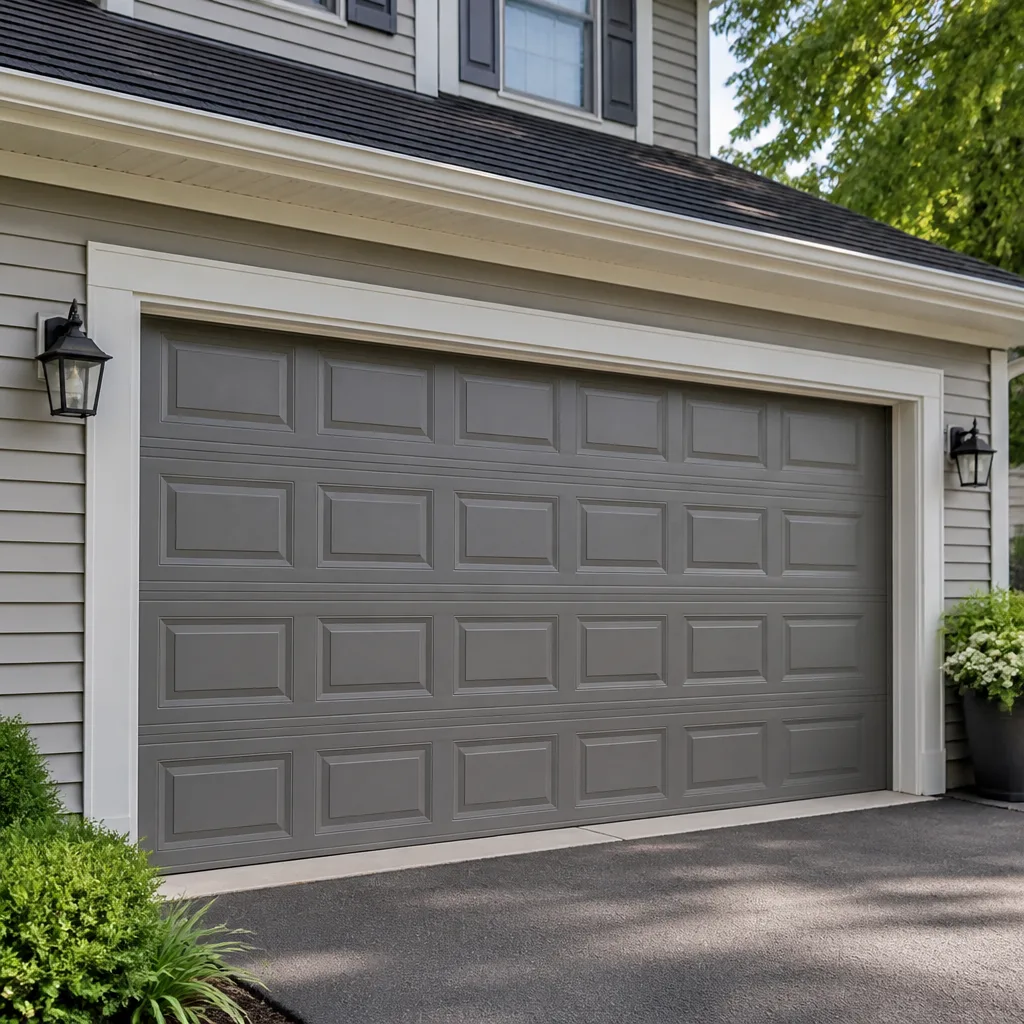 Raised-panel steel
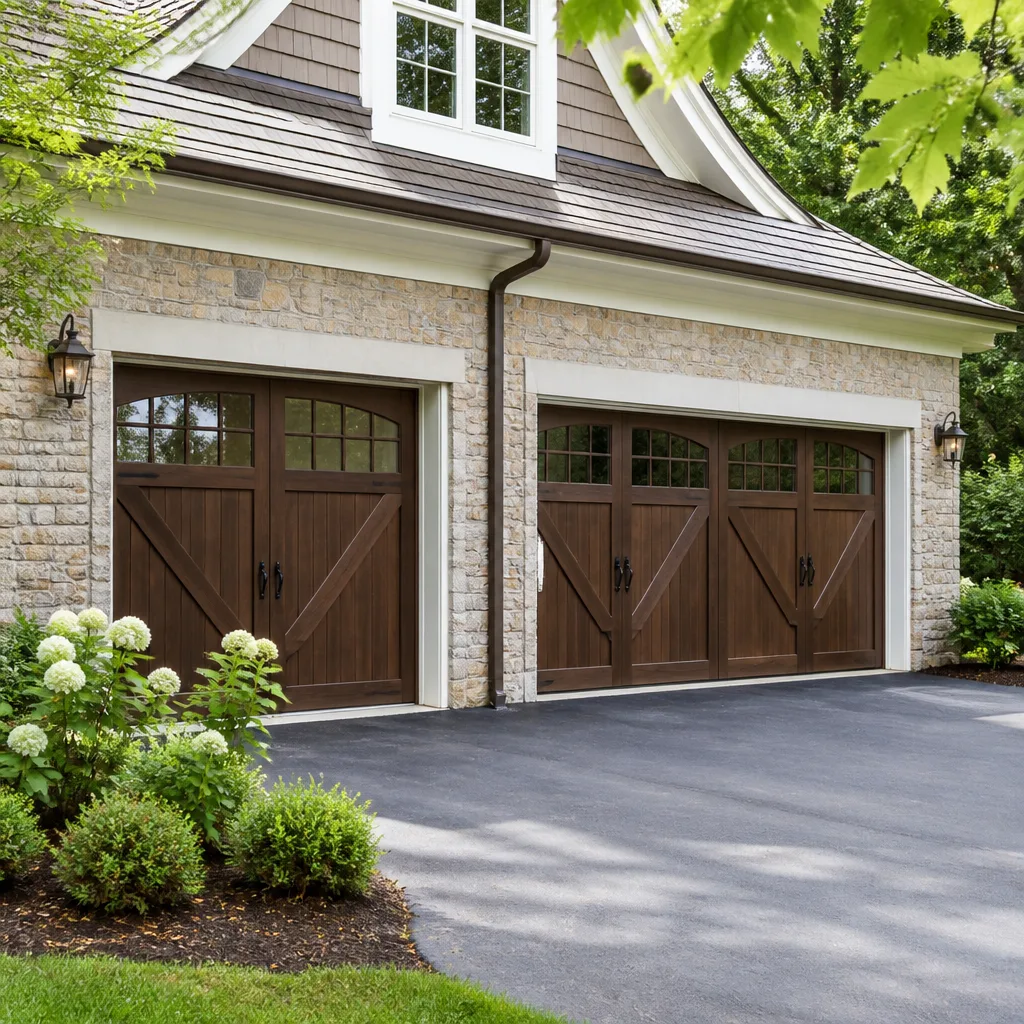 Carriage house
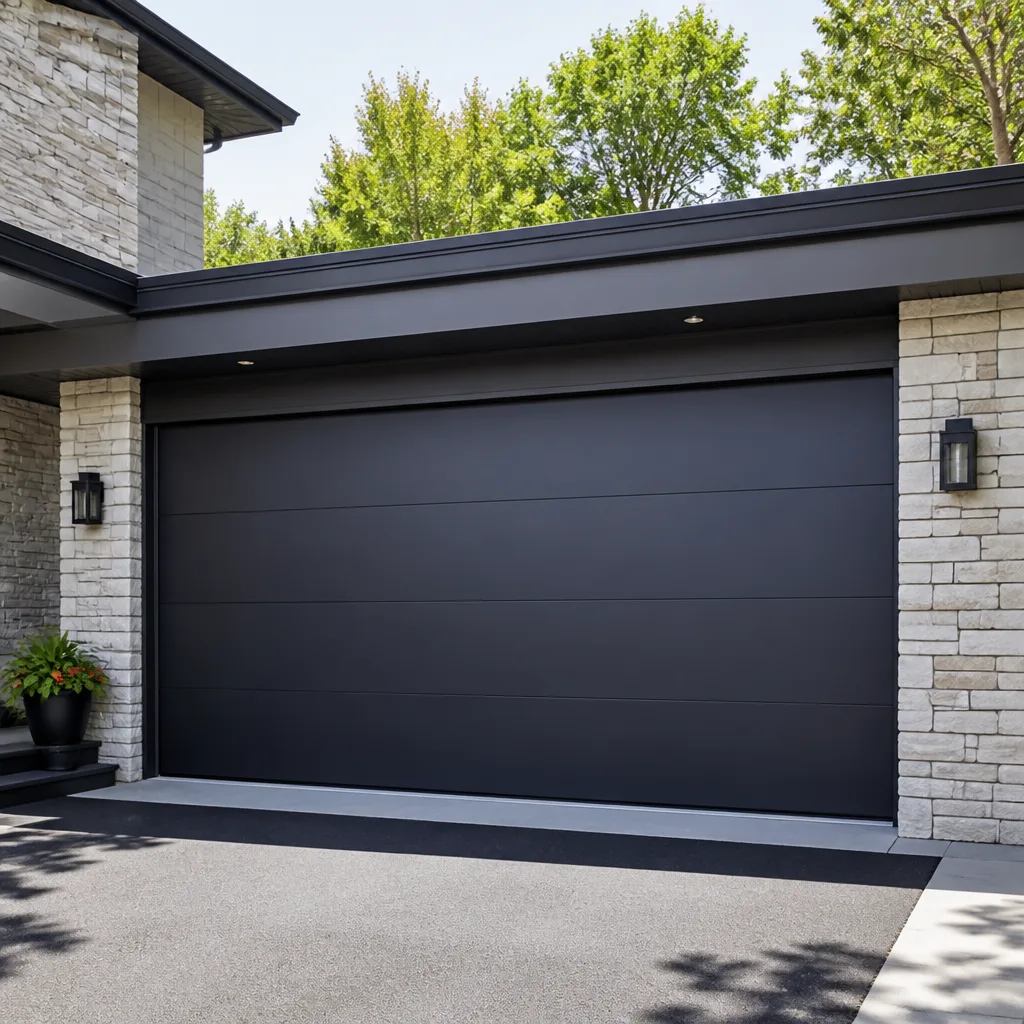 Modern flush
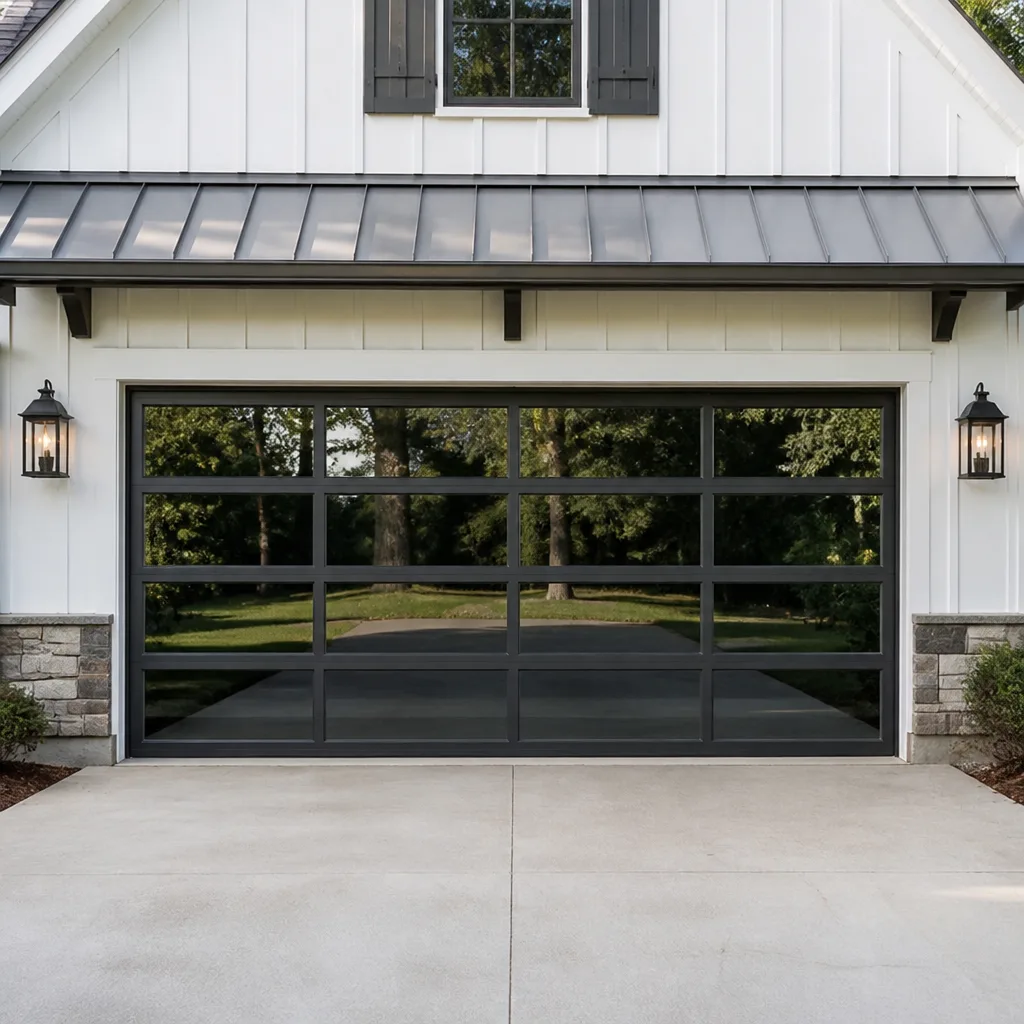 Full-view glass
 LiftMaster openers
 Chamberlain openers
Full 25-point door and opener safety check with every visit - springs, cables, rollers, tracks, and your LiftMaster or Chamberlain opener included
You get a price before we start. It does not change when the truck arrives.
Get your free estimateGarage Door Warning Signs: A Henderson Homeowner’s Reference Guide
A garage door that takes 12 seconds to open when it used to take 9 is telling you something specific about your spring tension, and most Henderson homeowners won’t notice the difference until the door stops opening entirely. The warning signs that actually matter aren’t the dramatic snaps and crashes you see in home improvement videos. They’re the slow-onset signals: the half-second hesitation on the way up, the slight lean when the door rests at the halfway point, the faint metallic whine that wasn’t there last spring. This guide covers what those signals mean, which ones demand action this week versus this afternoon, and what a trained eye sees in a Henderson garage that a generic online checklist misses. For more on local maintenance, see our Seasonal Garage Door Care for Henderson: Year-Round Homeowner’s Guide.
Quick Answer
Garage door warning signs in Henderson fall into four categories you can observe yourself: sound (grinding, squealing, popping), speed (slower than normal operation, hesitation), alignment (gaps, lean, uneven movement), and smell (electrical burning odors from the opener motor). A properly functioning door opens and closes smoothly at a consistent speed, sits level at rest, and runs quietly enough that you don’t think about it. If you notice any change in how the door behaves – even a small one – that’s the warning sign. It means something is wearing, and in Henderson’s desert climate, wear accelerates faster than in mild coastal areas. For a deeper look at local factors, read The Complete Guide to Garage Door in Henderson.
Styles & brands we work with
Table of Contents
- Warning Signs You Hear: What Different Sounds Mean
- Warning Signs You See: Speed and Movement Changes
- Warning Signs You See: Alignment and Visual Clues
- Desert-Specific Warning Signs Henderson Homeowners Should Know
- The Balance Test: A 2-Minute Diagnostic You Can Do Safely
- Which Signs Mean Same-Day Service vs. This Week
- What NOT to Do When You Spot a Warning Sign
- Common Mistakes to Avoid
- When to Call a Professional
- Frequently Asked Questions
Warning Signs You Hear: What Different Sounds Mean
Your garage door talks to you every time it cycles. Most Henderson homeowners tune it out the same way they tune out the hum of the air conditioner. But the sounds coming from your door are the earliest and most reliable warning system you have. Here’s what specific sounds mean and how serious each one is.
Squealing or high-pitched whining during operation. This almost always points to rollers or hinges that have lost lubrication, or rollers that have begun to seize. In Henderson’s dry air, lubrication breaks down faster than in humid climates. The grease that was applied at installation bakes off under summer heat, especially if your garage faces west and absorbs afternoon sun. A dry roller doesn’t just make noise – it creates drag, which forces the opener motor to work harder and wears the roller bearings unevenly. The fix is often straightforward: clean the track and apply the right lubricant. But if the noise persists after lubrication, the roller bearings themselves are shot, and that’s a replacement job, not a maintenance one.
Grinding or metal-on-metal scraping. This is a more serious sound. It usually means a roller has seized completely and is now being dragged along the track rather than rolling. Every cycle with a seized roller scores the track. Given enough cycles, you’re looking at track replacement in addition to new rollers. If you hear grinding, stop cycling the door and get it looked at. Continuing to operate a door with a seized roller is one of the few homeowner actions that reliably turns a $50 part into a $300 repair.
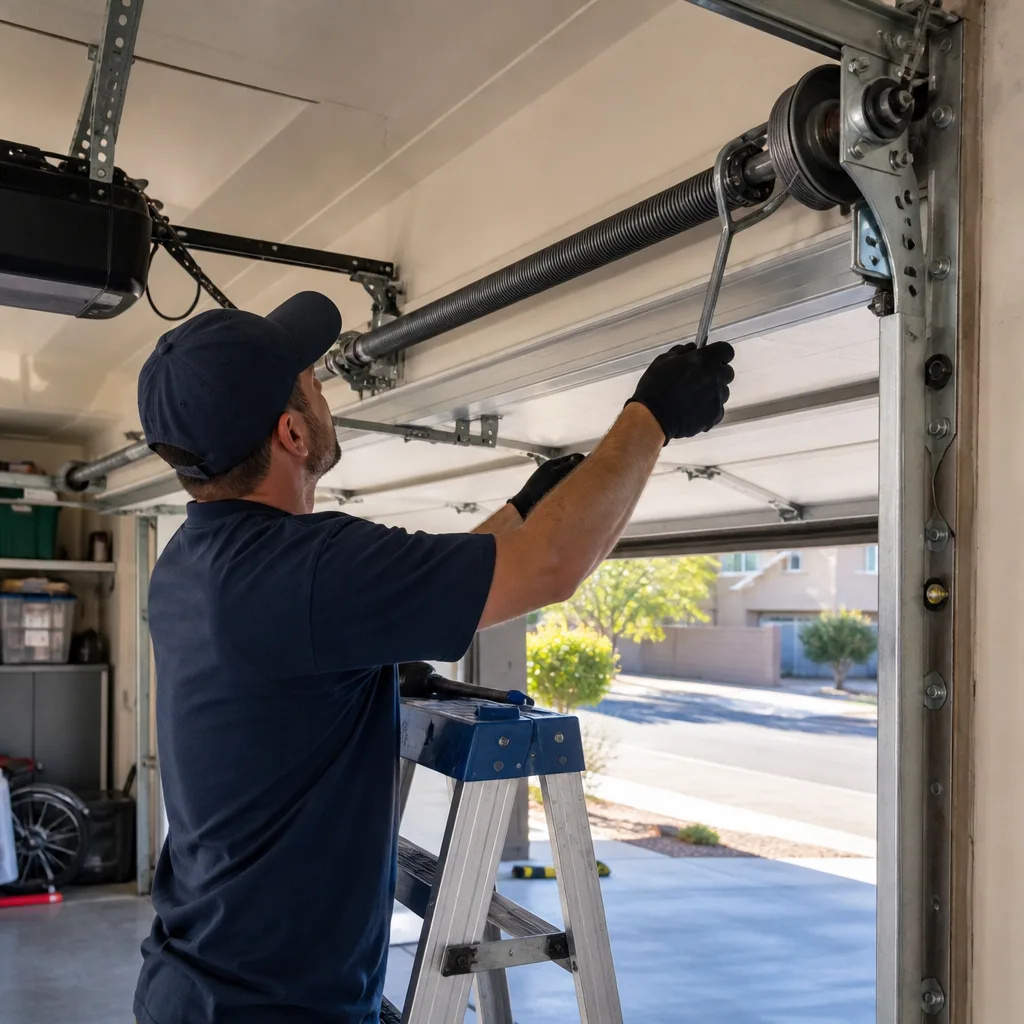
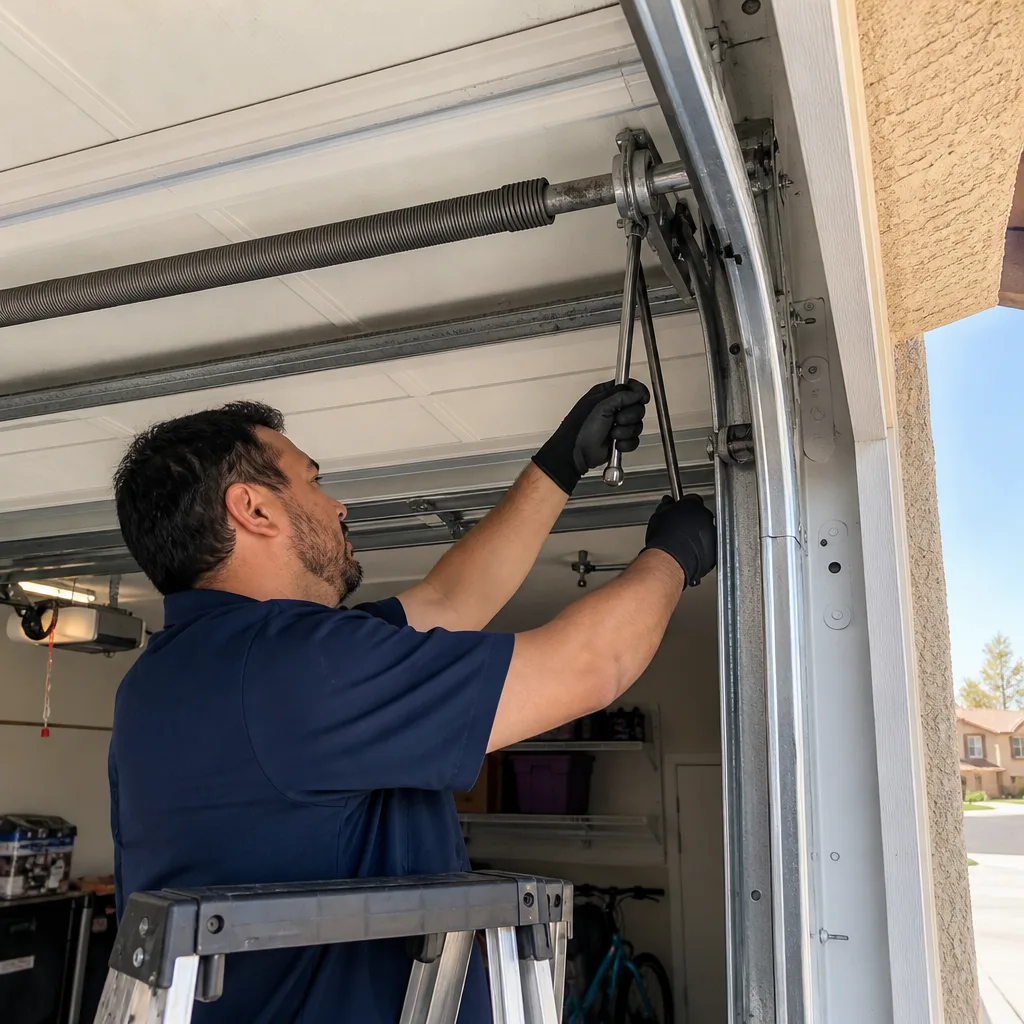
Popping or snapping sounds. When a torsion spring – the thick coiled spring mounted above the door that bears most of the lifting load – begins to fail, it often gives a warning in the form of popping or creaking sounds as the coil shifts. A full spring break sounds like a gunshot in the garage, but the pops that precede it are the warning. If your door makes a popping sound during operation, especially when the door is in the upper half of its travel, that’s a spring under stress. It may hold for weeks or fail tomorrow. Because torsion springs are under hundreds of pounds of tension, this is not a sound to investigate yourself. Call someone who handles these daily.
Rattling from the opener unit. If the rattling comes from the motor housing rather than the door itself, it can indicate loose mounting bolts, a worn drive gear inside the opener, or a chain that has stretched beyond tolerance. Chain-drive openers are common in Henderson garages, and the heat accelerates chain stretch. A rattling opener is rarely an emergency, but it’s a sign the unit is working against itself. Left alone, the strain shortens the opener’s lifespan.
Warning Signs You See: Speed and Movement Changes
Speed changes are the most overlooked warning sign in garage door diagnostics. A door that opens in 12 seconds when it used to take 9 is not “still working fine.” It’s telling you the spring is losing tension, or the opener motor is fighting resistance it didn’t have before. Here’s what movement changes indicate.
Hesitation at the start of the cycle. A door that pauses for a half-second before it begins to move upward is often showing the first sign of spring wear. The torsion spring is designed to counterbalance the door’s weight, which means the opener should only need to provide a small assist. When the spring loses tension, the opener has to work harder from a dead stop, and that shows up as hesitation. It’s especially noticeable on the upward cycle. This is a classic “weeks not months” signal.
Slower overall operation in one direction only. If the door opens at normal speed but closes slowly, or vice versa, the problem is usually with the opener’s force settings or a track obstruction. But if both directions are slower than they used to be, the issue is more likely the spring system or accumulated friction in the rollers and hinges. As a rule of thumb: a door that’s 25% slower than it was six months ago has a mechanical cause. It will not self-correct, and the failure point is getting closer every cycle.
The door reverses direction mid-cycle. A door that starts to close, then reverses and opens again without any visible obstruction, is usually triggering the safety sensor system. In Henderson, the dust that accumulates on sensor lenses – especially after windy spring days – is a common culprit. But if the sensors are clean and aligned, mid-cycle reversal can indicate a problem with the opener’s logic board or a force setting that’s drifted out of spec. This one is worth fixing promptly. A door that reverses unpredictably is a safety hazard, and in a city with as many children riding bikes as Henderson has, the stakes are real.
The door stalls at the same point every cycle. If the door consistently bogs down or stops at a particular point – often about a third of the way up or two-thirds of the way down – something in the track or the spring system is creating a resistance peak at that specific position. It could be a bent track section, a misaligned hinge, or a cable that’s beginning to fray and catch. A consistent stall point is actually a diagnostic gift: it tells a technician where to look first. Our team at Garage Door Repair in Henderson starts with the stall point and works outward from there.
Warning Signs You See: Alignment and Visual Clues
Visual inspection doesn’t require any mechanical knowledge. You just need to know what a healthy door looks like and what a door under stress looks like. The difference is usually visible in seconds.
Gaps at the bottom when the door is closed. Close your door and look at the floor line from inside the garage. If you see daylight under one corner but not the other, the door is not sitting level. This can come from a cable that’s stretched on one side, a spring that’s lost tension unevenly, or track brackets that have shifted. A small gap – under a quarter inch – is often just weather seal wear. A larger, uneven gap means the door itself is out of square. That’s a mechanical issue, not a seal issue.
The door leans when stopped halfway. Open the door manually (pulling the red emergency release cord) and stop it at the halfway point. Release it gently. A properly balanced door should stay put, roughly level. A door that drifts noticeably to one side, or drops or climbs on its own, has a spring or cable problem. This is the single most informative visual test a homeowner can perform, and it takes 30 seconds. We’ll cover it in more detail below.
Cables that look different from each other. The lifting cables run up both sides of the door and wrap around drums near the top. In a healthy system, both cables should look taut and run in clean, even wraps on the drums. If one cable looks slack, or if the wraps are uneven, or if you see loose strands poking out from the cable body, that’s a warning sign with an expiration date. A frayed cable can snap under load, and when it does, the door can slam down on one side. Cable damage is one of the warning signs we recommend acting on immediately. For Henderson specifics on this failure mode, see our guide to Garage Door Cable Repair in Henderson.
Rust or corrosion on springs, cables, or bottom brackets. Henderson’s low humidity means rust is less aggressive here than in coastal cities, but it’s not absent. Older garages in Green Valley and parts of Boulder Highway corridor that predate modern sealing can trap moisture, especially after monsoon season rains. Rust on a torsion spring creates friction points that concentrate stress. Rust on cables weakens individual strands. If you see rust, the component’s useful life is reduced. Plan for replacement before it fails on its own schedule.
Desert-Specific Warning Signs Henderson Homeowners Should Know
Generic garage door guides written for national audiences miss the factors that matter most in southern Nevada. Henderson’s climate creates specific failure modes that a homeowner in, say, Portland would never encounter. Here’s what the desert does to your door, and what to watch for as a result.
UV-bleached panels hiding stress fractures. Henderson gets more than 290 sunny days per year. That ultraviolet exposure doesn’t just fade your door’s color – it breaks down the polymers in steel and fiberglass panels over time. The surface becomes brittle. What looks like cosmetic fading can actually be the early stage of a stress fracture, especially around the panel seams and where the hinges attach. Run your hand along a faded panel’s hinge line. If the surface feels chalky or you see hairline cracks radiating from the hinge bolts, the panel integrity is compromised. A panel with a developing fracture can fail under the repeated stress of normal cycling. Replacement is cheaper than the damage a panel can do if it lets go mid-cycle.
Grit-packed rollers that sound fine but are failing. Henderson sits on sand and decomposed granite. The fine grit that blows through neighborhoods in the spring doesn’t just collect on your patio furniture – it works its way into garage door rollers and tracks. The dangerous part: a grit-packed roller often doesn’t make noise. The sand acts as a temporary buffer, filling the bearing clearances. The roller keeps rolling, so there’s no squeal. But the bearings are being ground down from the inside. By the time a grit-packed roller starts making noise, the bearing failure is already advanced. Once a year, wipe down your rollers with a clean cloth and inspect for sandy residue. If the roller surface feels gritty after cleaning, the bearing seals have failed.
Heat-expanded track gaps after monsoon season. The Mojave’s temperature swings are extreme – 40-degree differences between daytime highs and overnight lows are common in the shoulder seasons. Metal tracks expand and contract with every swing. Over years, that cycling can work track brackets loose and create gaps between track sections. After a monsoon season, when the metal cools rapidly after afternoon rains, the expansion-contraction cycle is especially aggressive. A track gap of even an eighth of an inch can catch a roller at the wrong angle and create a resistance spike. Check your track bolts twice a year, especially where the vertical track meets the horizontal curve.
Weather seal baking and cracking. The rubber strip along the bottom of your door takes a beating in Henderson’s heat. It bakes, hardens, then cracks. A cracked seal isn’t just an energy-efficiency issue – it lets dust and sand into the garage on windy days. That dust then lands on your tracks and rollers, accelerating the wear cycle described above. Replacing a bottom seal is cheap, usually under $100 installed. We see the difference in track cleanliness between Henderson homes that maintain their seals and those that don’t. The ones that don’t have more roller failures. It’s that direct.
The Balance Test: A 2-Minute Diagnostic You Can Do Safely
The balance test is the single most informative diagnostic a Henderson homeowner can perform, and it doesn’t require any tools or mechanical skill. Here’s how it works and what the results tell you.
Step 1: Prepare the door. Close the door completely. Pull the red emergency release cord to disconnect the door from the opener carriage. This is a safe action – you’re not touching any component under tension.
Step 2: Lift manually. Grip the door handle or bottom edge and lift. A properly balanced door should rise smoothly with steady effort. It should feel heavy but not like a dead lift. You should be able to lift it to the halfway point and let go without the door moving more than a few inches either way.
Step 3: Test the halfway hold. Stop at the midpoint and release carefully. The correct result: the door stays approximately where you left it. If it drops, the springs have lost tension and the opener is compensating for more weight than it should. If it climbs, the springs are over-tensioned, which usually means someone adjusted them incorrectly or they were installed without accounting for your door’s weight and cable geometry.
Step 4: Test the top of travel. Lift the door all the way up. It should stay open without support. If it drifts down, the spring tension is low and the door is effectively heavier than the springs can manage. If it slams upward or feels springy at the top, that’s a different problem – usually a cable or drum issue that has thrown the balance off on one side.
Step 5: Reconnect. Lower the door gently to the closed position. Pull the emergency release cord again or press the wall button to re-engage the opener carriage. Run one full cycle to confirm the opener is connected properly.
If your door fails any part of this test, you have a spring, cable, or balance problem. That’s not a maintenance issue – it’s a repair. At Brock Garage Doors Henderson home, we perform this test as part of every service call, but homeowners who do it themselves catch problems earlier, and earlier is always cheaper.
Which Signs Mean Same-Day Service vs. This Week
Not all garage door warning signs are created equal. Some can be scheduled for a convenient time, and some need a technician today. Here’s the triage a working garage door professional uses.
Same-day or emergency: act now
- Burning or electrical smell from the opener motor. This indicates overheating, a failing capacitor, or a motor winding that’s shorting. Unplug the opener and leave it unplugged until a technician arrives. This is a fire safety issue.
- A snapped cable. If one cable has broken, the door is under uneven load. Continuing to operate it will damage the panels, the track, and potentially the other cable. One broken cable usually becomes two within a few cycles.
- A door that slams down when released. If you pull the emergency release and the door drops hard, the springs are doing almost nothing. The door is a falling weight. Keep clear of the door’s path and call immediately.
- The door comes off the track. A door that has jumped the track is dangerous to operate. The rollers are no longer guiding the panels. Every cycle risks further damage and injury. Stop using the door.
- Visible arcing or sparking at the opener or sensors. Any electrical spark is a stop-and-call-now situation.
Schedule this week: important but not immediate
- Slow operation in both directions
- Hesitation at the start of the cycle
- Squealing, whining, or grinding that has developed recently
- The door failing the balance test
- Gaps at the bottom that indicate an alignment issue
- Rust or corrosion on springs and cables
- Mid-cycle stalling at a consistent point
These triage categories reflect how we actually book jobs. A Henderson homeowner with a burning opener smell gets prioritized over a homeowner with a slow-opening door, not because the slow door doesn’t matter, but because the burning smell is a genuinely urgent situation. When you call Garage Door Opener Repair in Henderson, the person answering will ask you about the specific symptoms for exactly this reason. It helps us get the urgent calls dispatched first.
What NOT to Do When You Spot a Warning Sign
Homeowners who mean well sometimes do things that turn a $150 repair into a $900 replacement. Here are the specific interventions to avoid, and why each one is dangerous or counterproductive.
Do not adjust torsion spring tension yourself. Torsion springs are wound under hundreds of pounds of force. The winding bars used to adjust them can slip or break, and when that force releases, it releases into whatever is in the way. Every year, homeowners in the Las Vegas Valley are seriously injured attempting spring adjustments. This is the number-one rule of garage door safety. Companies like Genie and Clopay print warnings in their manuals for a reason. A licensed spring professional winds springs daily and knows the specific tension specs for your door’s weight, height, and cable setup. You do not.
Do not bypass or tape over safety sensors. The photo-eye sensors at the bottom of your door track exist to stop the door if a child, pet, or object breaks the beam. Some homeowners, frustrated by a door that won’t close because of sensor misalignment, respond by taping the sensors together or hardwiring them to bypass the safety circuit. This converts a working safety system into a 150-pound falling weight with nothing to stop it. Henderson has thousands of homes with young families. This is not a shortcut. It’s a liability and a tragedy waiting to happen.
Do not keep cycling a door that’s making grinding noises. Grinding means a roller is seized or a hinge is binding. Every cycle with a seized roller carves metal out of the track. What starts as a $25 roller replacement becomes a $400 track replacement after a few weeks of “just one more cycle.” If you hear grinding, stop and call.
Do not use WD-40 on the rollers, hinges, or springs. WD-40 is a solvent, not a lubricant. It strips away whatever lubricant remains and then evaporates, leaving the components drier than they were before. The correct product is a garage-door-specific lubricant or a white lithium grease, applied to the roller bearings, hinge pins, and the torsion spring coils. If you’re not sure what to use, any garage door technician can show you in 30 seconds during a service call.
Do not attempt to remove a panel for DIY replacement. Panels are connected to the spring system and the cables. Removing a panel without releasing the spring tension correctly is extremely dangerous, and even if you complete the removal, reattaching everything so the door is balanced requires a spring adjustment anyway. This is not a weekend project.
Common Mistakes to Avoid
- Ignoring noise because “it’s an old door.” Old doors get noisy, but the specific sound tells you the specific problem. A 15-year-old door with new grinding sounds has a new failure, not old-age character. The age of the door doesn’t make grinding safe to ignore.
- Assuming slow operation means the opener is wearing out. In our experience, slow operation is more often a spring or friction problem than an opener motor problem. Replacing an opener that’s actually fine, while leaving a failing spring in place, doesn’t solve anything and costs more than the right repair would have. We work on Genie, LiftMaster, Chamberlain, and the other major brands, and the pattern is consistent: the motor is rarely the first thing to fail.
- Waiting for a “convenient time” once the door fails the balance test. The balance test is the canary in the coal mine. A door that won’t hold at the halfway point is working its springs and cables harder every cycle. Waiting weeks turns a spring replacement into a spring-and-cable job, or a cable-and-panel job.
- Oiling the track itself. The track should be clean and dry. Lubricant on the track surface actually attracts grit and creates a paste that accelerates roller wear. Lubricate the roller bearings, not the track.
- Fixing the symptom instead of the cause. If the door is misaligned, repositioning the panel without addressing the stretched cable or worn spring that caused the misalignment in the first place just postpones the problem. The door will drift out of alignment again within weeks. In Henderson, where heat accelerates cable stretch, this is especially common.
- Using a big-box store technician instead of a garage-door specialist. General handyman services are fine for some jobs. Garage door springs and cables are not one of those jobs. The forces involved are specific, the adjustment tolerances are tight, and the cost of a mistake is measured in hospital bills and damaged doors. Hire someone who does this work daily.
When to Call a Professional
You should call a professional when the warning sign involves any component under tension – springs, cables, and the bottom brackets that anchor them. Not sure how to choose one? Read How to Hire a Garage Door Contractor in Henderson: A Step-by-Step Guide. You should also call when a balance test fails, when you hear grinding or popping, when the door stalls mid-cycle, or when the opener shows electrical symptoms like burning smell or sparking. The common thread: if the diagnosis requires touching a tensioned part or the fix requires a spring adjustment, this is not a DIY job. Brock Garage Doors Henderson offers free estimates in Henderson – call (775) 458-8864 for an exact price in writing before any work starts.
Frequently Asked Questions
Most garage door repairs in Henderson run between $125 and $350 depending on the part and the door type. Cable repairs typically cost $150 to $275, roller replacement runs $120 to $200 for a full set, and spring replacement usually runs $180 to $340 for a torsion spring. The exact price depends on your door’s weight, the spring’s wire size and length, and whether other components like cables or bearings are worn. Call (775) 458-8864 for a free estimate with the price in writing before any work begins.
Yes, in most cases we can dispatch a technician to a Henderson home the same day, especially for emergency situations like snapped cables, a door off the track, or an opener with a burning smell. We keep a full inventory of common springs, cables, rollers, and opener parts on our trucks. Call (775) 458-8864 and describe what you’re seeing, and we’ll tell you honestly whether it’s a same-day situation or something that can be scheduled this week.
No. Brock Garage Doors Henderson provides a written price before any work starts, and the number on the invoice matches the number you approved. If the technician discovers an additional issue, you’ll get a new written price before any additional work is done. This is part of The Garrison Standard, and it’s a condition of every job we take in Henderson.
The earliest signs of spring wear are slower door operation, hesitation at the start of the upward cycle, and a door that fails the balance test by dropping or climbing when held at the halfway point. You may also hear popping or creaking sounds from the spring itself as the coils shift under load. If you notice any of these, the spring has weeks to months of useful life remaining, not years. Schedule a repair before it breaks.
Yes. Henderson’s heat degrades rubber seals, bakes lubricant out of roller bearings, accelerates chain stretch on openers, and contributes to thermal expansion and contraction of track components. Panels on west-facing garage doors are especially vulnerable to UV embrittlement. Homes in Henderson neighborhoods like Green Valley and Anthem that see full afternoon sun should expect faster seal, spring, and roller wear than homes with shaded garages. Amarr and Wayne Dalton both offer UV-rated panels for exactly this reason, but the mechanical components still age faster in the desert. Browse our more guides & resources for additional Henderson-specific maintenance tips.
Our trucks carry the most commonly needed parts: torsion and extension springs in multiple sizes, lifting cables in standard lengths, roller sets, hinges, drums, and opener components. The majority of Henderson repairs are completed in a single visit. If your door needs a non-standard part – an uncommon spring wire size or a specific panel – we’ll tell you before you commit, with the lead time spelled out in writing.
The Bottom Line
Garage door warning signs are observable, diagnosable, and actionable, but only if you’re paying attention. The sounds, speed changes, and visual cues your door gives you in Henderson are specific: a squeal means lubrication failure, a hesitation means spring tension loss, a lean at rest means cable or balance problems, and a burning smell means an electrical emergency. Perform the balance test twice a year, replace weather seals before they crack, keep grit off the rollers, and never touch a component under tension. When a warning sign appears, the right response is a call, not a guess. Your repair is covered in writing for 365 days – if it fails in that window, we return at no charge. Everything starts with a free estimate at (775) 458-8864.
Written by Wade Mercer, Owner at Brock Garage Doors Henderson, serving Henderson since 2001.
See the difference
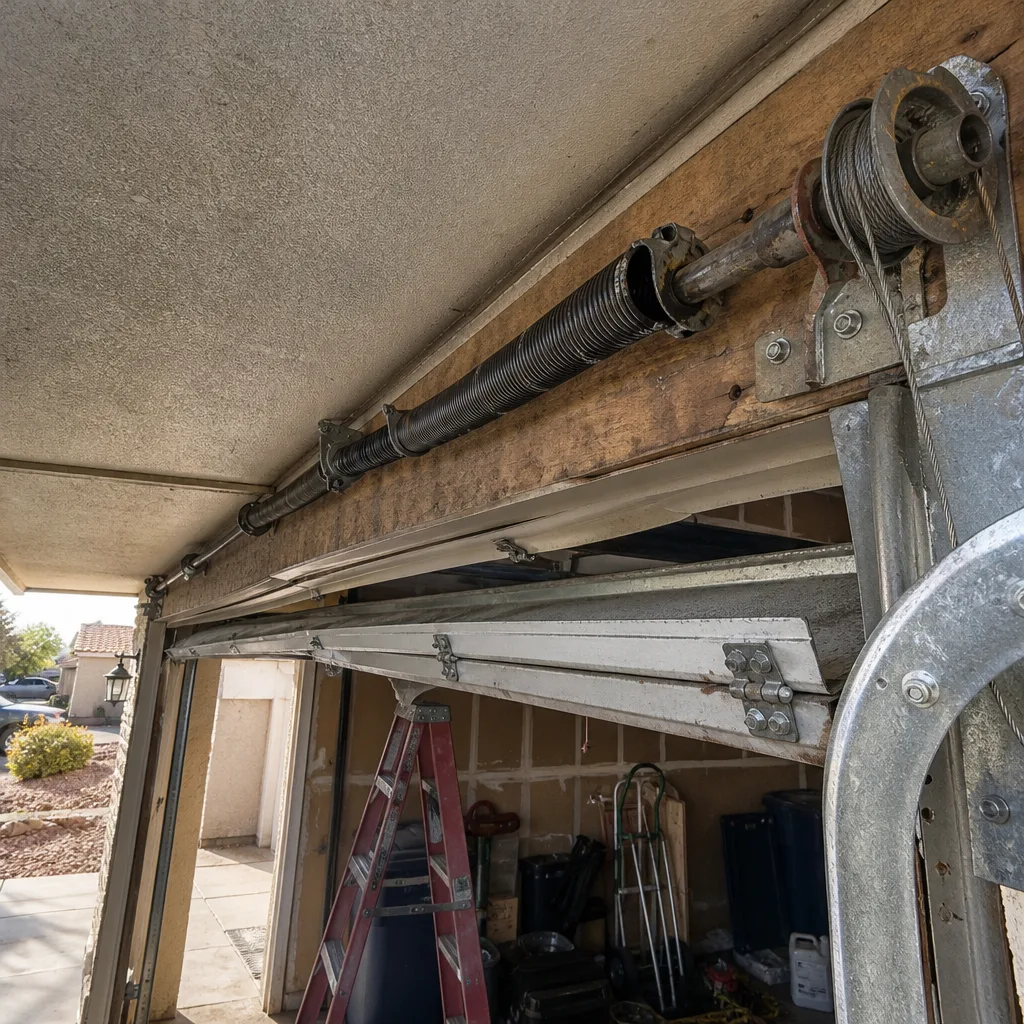 Before
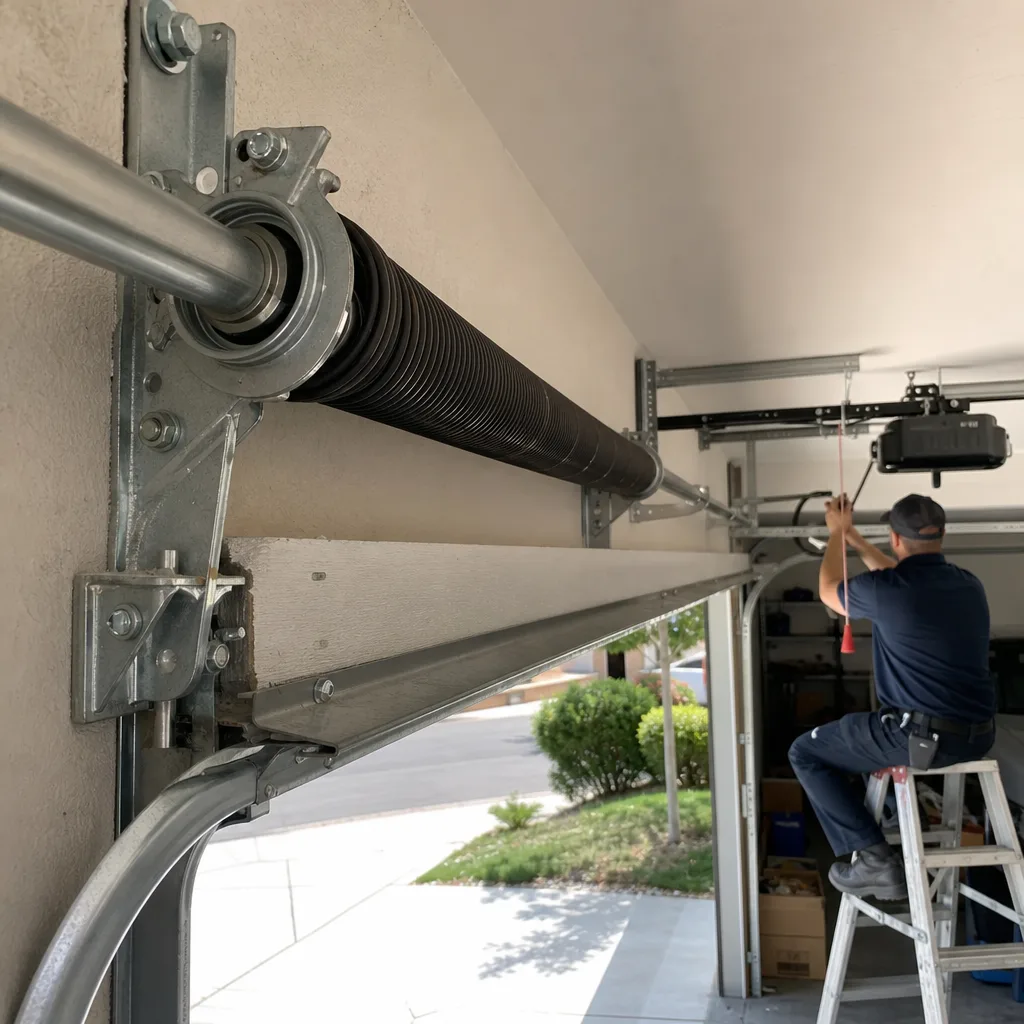 After
After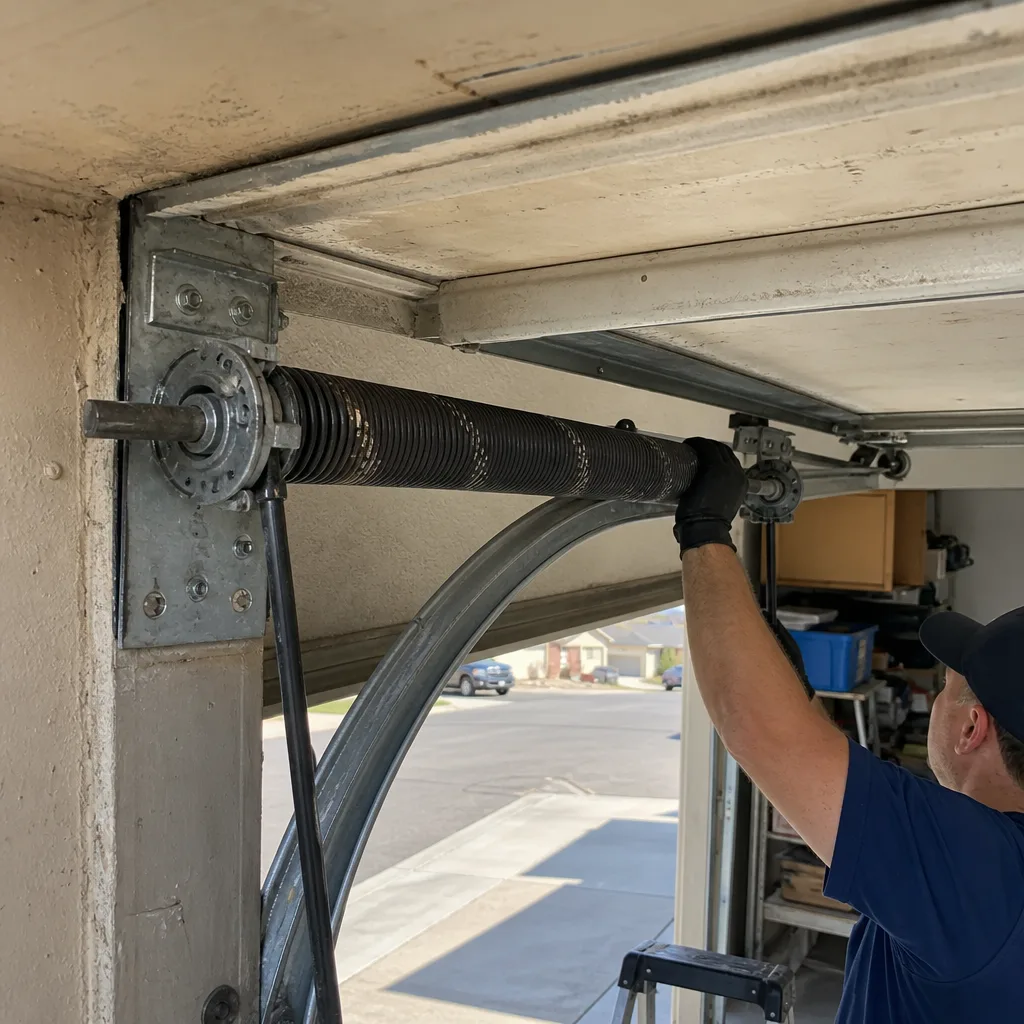 Before
 After
After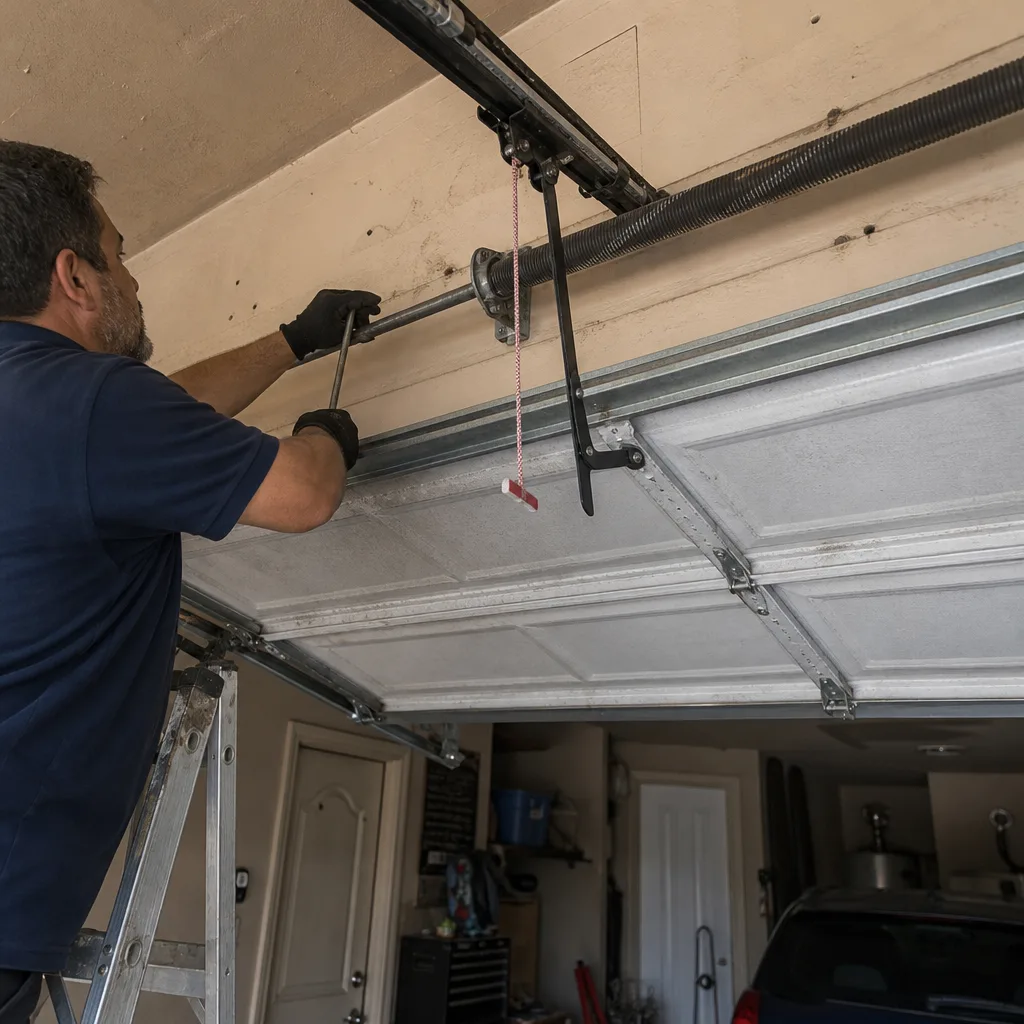 Before
 After
After